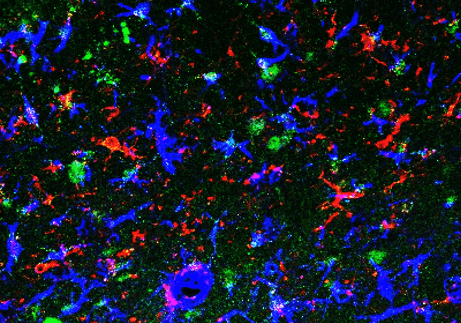
Core question: Can astrocytic metabolic and homeostatic dysfunction explain circuit abnormalities in neurodevelopmental and mood disorders?
We are extending our gliocentric framework from neurodegeneration to psychiatric conditions. Current efforts focus on astrocytic metabolism in neurodevelopmental disorders and on astrocyte–neuron interaction in depression models. (Related: Neurosci Biobehav Rev 2024.)
Ongoing directions: Glia–neuron metabolic coupling in autism models; astrocytic contributions to serotonergic and hypothalamic circuits in mood disorders.
Related Publications
From synapses to circuits: what mouse models have taught us about how ASD impacts hippocampal function. Neurosci Biobehav Rev 2024 (co-corr.) · 10.1016/j.neubiorev.2024.105559
Selected collaborations
Role of phospholipase Cη1 in lateral habenula astrocytes on depressive-like behavior in mice. EMM 2025 · 10.1038/s12276-025-01432-1
Discovery of a neuroprotective diosgenin derivative as a novel antidepressant candidate targeting LPS–TLR4 signaling. J Med Chem 2026 · 10.1021/acs.jmedchem.5c02981
Foundational studies
Activation of astrocytic mu-opioid receptor causes conditioned place preference. Cell Rep 2019 (co-first) · 10.1016/j.celrep.2019.06.071
Signaling mechanisms of μ-opioid receptor in the hippocampus: disinhibition versus astrocytic glutamate regulation. Cell Mol Life Sci 2021 (co-first) · 10.1007/s00018-020-03595-8